Support · Knowledge Center
Frequently Asked Questions About Valve Gear Operators
This FAQ center delivers accurate technical information for engineers, EPC contractors, valve manufacturers, distributors, maintenance personnel, and industrial end users who specify worm gear operators and valve gearboxes. Use it as a central knowledge base covering product specifications, installation standards, OEM programs, export logistics, and application engineering — with deep-dive FAQ pages organized by topic and cross-links to installation guides, torque selection resources, and direct engineering support when your project requires documented answers beyond a quick reference. Whether you are preparing a tender submittal, qualifying an OEM supply agreement, commissioning a water treatment isolation valve, or troubleshooting increased handwheel effort in the field, you will find structured worm gear operator questions grouped by discipline — and a general FAQ library below for cross-cutting topics such as ISO 5211, IP protection, actuator integration, and service life planning that apply across product families and industries.
Browse by Topic
Explore FAQ Categories
Valve gearbox frequently asked questions are organized into five specialist sections — not a single flat list. Each category page expands on worm gear operator questions relevant to procurement, project engineering, field installation, and long-term maintenance. Start with the topic closest to your inquiry, then use the general FAQ accordion below for cross-cutting answers on ISO 5211, torque, protection levels, and automation integration.
Product FAQ addresses catalog configuration, torque tables, and valve compatibility. OEM FAQ explains private-label workflows, first-article testing, and production documentation for valve manufacturers. Export FAQ covers certificates, packing, lead times, and inspection options for international EPC deliveries. Installation FAQ focuses on mounting, stem alignment, commissioning, and actuator-ready setups. Technical FAQ supports torque methodology, gear ratios, SCADA integration pathways, and structured troubleshooting when performance degrades in service — each page is maintained by the same application engineering team that reviews project inquiries and updates answers as standards and field experience evolve.
Product FAQ
Model families, torque tables, protection classes, and valve compatibility for quarter-turn worm gears, bevel gearboxes, and multi-turn units.
OEM FAQ
Private-label manufacturing, ODM development, engineering support, and production capabilities for valve OEM partners.
Export FAQ
International shipping, export documentation, certifications, packaging standards, and lead times for global EPC deliveries.
Installation FAQ
Mounting procedures, ISO 5211 interfaces, shaft alignment, commissioning, actuator integration, and travel stop adjustment.
Technical FAQ
Torque selection, gear ratios, automation integration, troubleshooting pathways, maintenance intervals, and application engineering.
General Answers
General Frequently Asked Questions
The following valve gear operator FAQ entries address the most common worm gear operator questions received across industries — from first-time specification through retrofit and automation upgrade. Answers are written for engineering review and can be supplemented with category-specific pages above or our detailed support guides for installation, maintenance, and torque methodology. Where project-specific conditions affect the correct answer — unusual media, high-cycle duty, submersible installation, or combined electric actuator packages — contact our engineering team with valve datasheets and operating history for a documented recommendation suitable for maintenance records and EPC technical submittals.
What Is a Valve Gear Operator?
A valve gear operator is a mechanical gearbox mounted on a valve to multiply handwheel torque or interface with an actuator, enabling reliable manual or automated valve operation. Worm gear, bevel gear, and multi-turn designs reduce input effort while providing position indication and optional self-locking hold. Gear operators are essential where direct stem torque exceeds safe manual limits or where standardized ISO 5211 mounting is required between valve and drive equipment.
What Types of Valve Gear Operators Do You Offer?
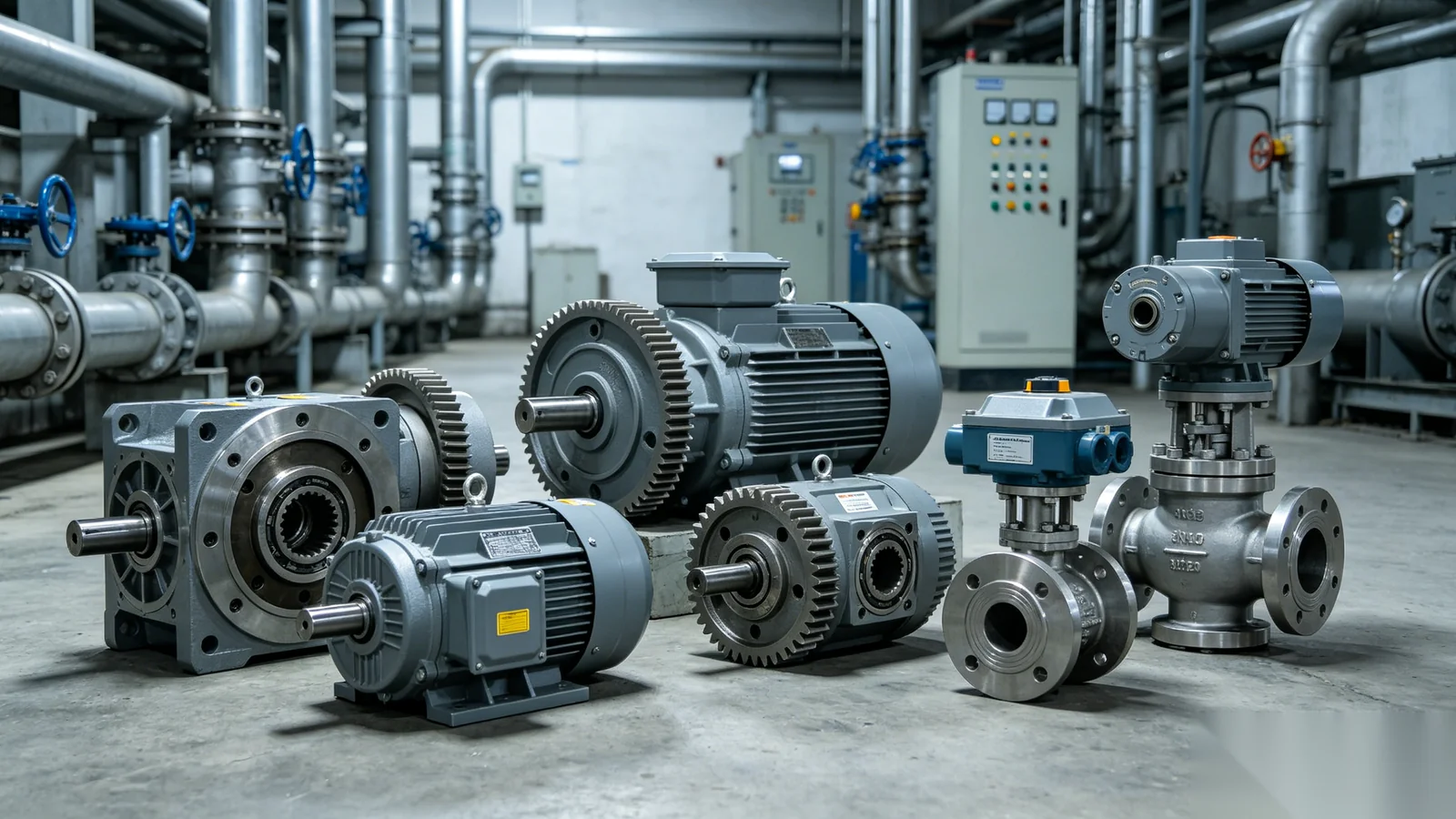
We manufacture quarter-turn worm gear operators, bevel gear operators for right-angle drives, multi-turn worm gearboxes for gate and globe valves, declutchable manual overrides, and IP67/IP68 submersible units. Each family includes catalog models and project-specific configurations with custom ratios, materials, coatings, and actuator-ready interfaces. See our Product FAQ for model matrices, torque ranges, and standard lead times by series.
Which Valve Types Are Compatible with Gear Operators?
Gear operators mount on butterfly valves, ball valves, plug valves, gate valves, globe valves, and knife gate valves when the valve top flange and stem interface match ISO 5211 or approved adapter patterns. Compatibility depends on required torque, turns to operate, stem diameter, and whether the valve is quarter-turn or multi-turn. Submit your valve datasheet for confirmation of flange code, stem engagement, and clearance envelope before ordering.
How Do I Select the Correct Gearbox?
Begin with valve break and run torque, stem size, flange pattern, duty cycle, and environment class. Apply your project safety factor to break torque — commonly 1.25 to 1.5 depending on standard — then select a gearbox whose rated output meets or exceeds that value at the required gear ratio and acceptable handwheel rim pull for your operations team. Cross-check ISO 5211 F-series compatibility, stem drive type, and IP rating for the installation environment. Our torque selection guide and application engineers provide written sizing recommendations with catalog model numbers, adapter plate requirements, and notes on declutchable or actuator-ready options when applicable.
What Is the Difference Between Quarter-turn and Multi-turn Gear Operators?
Quarter-turn gear operators deliver approximately 90° rotation for ball, butterfly, and plug valves — typically through a worm gear stage with optional self-locking. Multi-turn units accumulate many revolutions for rising-stem gate and globe valves, with higher ratio worm sets and thrust-capable stem nuts. Selecting the wrong motion class causes incomplete stroke or mechanical damage; always match operator type to valve travel.
What Is a Self-locking Worm Gear Operator?
Self-locking worm gear operators use worm/wheel geometry so the valve stem cannot back-drive the handwheel under static process loads — within rated design limits. This holds valve position without continuous input torque but does not replace a locked closed device where process safety rules require it. Self-locking efficiency varies with ratio, lubrication condition, and wear state over decades of service. High vibration, thermal cycling, or repeated partial stroke operation may affect hold capability — consult technical FAQ and application engineering when those conditions apply to your installation.
What Is ISO5211?
ISO 5211 is the international standard defining mounting dimensions between valve top flanges and gear operators or actuators — including F-series flange sizes, bolt circles, stem drive types, and coupling interfaces. Compliance ensures interchangeability and correct mechanical engagement. Our ISO5211 standards support page provides reference tables; installation FAQ covers field verification of flange match and stem nut depth before tightening mounting hardware.
Do You Offer IP67 and IP68 Protection?
Yes. IP67 gear operators resist dust ingress and short-term immersion; IP68 units are engineered for prolonged submersion per model test records — including buried service, flooded valve chambers, and wastewater applications where the unit may be submerged during storm events. Protection class applies to the assembled housing with correct cover torque, gasket condition, and cable gland discipline during installation. IP-rated units still require scheduled seal inspection and bolt torque verification; see maintenance guide for recommended intervals in marine, offshore, and municipal water duty.
Are Stainless Steel Gear Operators Available?
Stainless steel housings and hardware upgrades are available for corrosive, marine, and chemical environments where ductile iron and standard coatings are insufficient. Material selection balances corrosion resistance, torque capacity, and cost — often paired with enhanced surface treatment on worm sets. Provide your exposure class and media composition for a material recommendation aligned to project specifications and maintenance expectations.
Can Gear Operators Be Used with Electric Actuators?
Many gear operators are supplied actuator-ready with ISO 5211 interfaces and declutchable manual override for electric or pneumatic actuators. The gearbox provides torque multiplication and manual backup while the actuator delivers automated stroke. Integration requires matching flange, stem drive, torque rating, and travel stops. Installation FAQ and technical support assist with AUMA, Rotork, and other common adapter configurations.
Do You Support SCADA and Automation Systems?
Gear operators themselves are mechanical devices; position feedback and SCADA integration come from actuators, limit switches, and torque switches mounted on or above the gearbox. We support automation projects by supplying actuator-ready interfaces, declutchable overrides, and dimensional data for control panel design. Technical FAQ covers feedback device mounting, signal types, and commissioning checks. Application engineers review P&ID control requirements during actuator package selection so mechanical stroke, torque margin, and electrical feedback remain aligned through installation and SAT.
Do You Provide CAD Drawings?
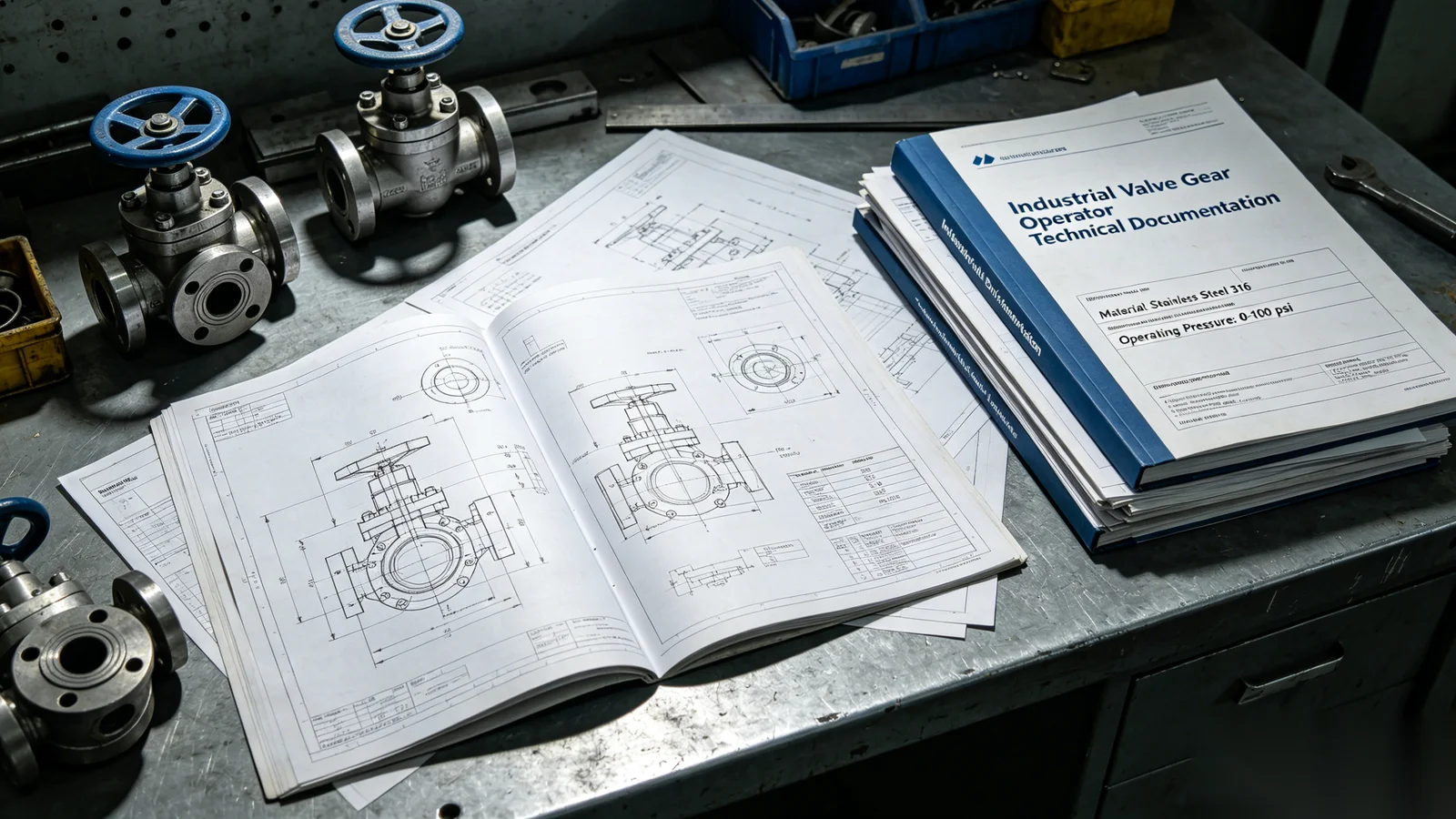
Yes. STEP, IGES, and SolidWorks models plus 2D installation drawings are issued for confirmed model selections — typically within 24–48 hours. Drawings show mounting bolt circles, overall height, handwheel clearance, and stem engagement for layout planning in congested valve galleries and actuator platforms. OEM partners receive project drawing numbers on purchase orders with revision control per ECO. EPC teams may request bundled submittal indexes aligned to document numbering conventions. Request CAD through technical support with valve tag data and selected catalog model for fastest turnaround.
Do You Offer OEM Manufacturing Services?
We provide OEM and ODM manufacturing for valve manufacturers — including private-label nameplates, custom ratios, stem interfaces, color systems, and NDA engineering under ISO 9001 quality processes. Programs cover first-article torque testing, witness inspection, and series production documentation with material EN 10204 3.1 traceability where required. MOQ and lead time vary by customization level and annual volume forecast. See OEM FAQ for onboarding workflow, tooling ownership, ECO management, and engineering support scope from concept through series production.
What Industries Do You Serve?
Our valve gear operators serve water and wastewater treatment, oil and gas, power generation, mining, marine, chemical processing, pulp and paper, and general industrial automation. Application experience informs material, IP, and ratio recommendations per duty class — including abrasive slurry, chlorinated municipal water, offshore salt spray, and high-cycle power plant isolation. Solutions pages describe sector-specific considerations for corrosion, duty cycle, and maintenance access. Engineering support applies the same technical criteria used in global EPC and OEM project deliveries, whether the installation is a greenfield treatment plant or a retrofit on an existing penstock gate.
How Long Is the Typical Product Service Life?
When correctly sized, installed, and maintained, industrial worm gear operators commonly achieve 20–30 years of service in municipal and process applications. Life depends on duty cycle, lubrication discipline, environmental exposure, and whether operating torque remains within design margins. Preventive maintenance per our maintenance guide extends interval between overhauls; abnormal torque or ingress should trigger inspection before catastrophic wear occurs.
How Can I Prevent Gearbox Failures?
Prevent failures through correct initial torque sizing, ISO 5211-aligned installation, proper lubrication type and interval, seal and cover bolt integrity, and prompt correction when handwheel effort increases. Avoid forcing operation past abnormal resistance or bypassing travel stops. Document baseline torque after commissioning and trend during inspections so gradual worm wear is detected early. Our troubleshooting guide maps early symptoms to corrective actions before worm set replacement becomes mandatory.
How Can I Request Technical Support?
Contact technical support via email or phone with valve datasheet, photos, serial number, and operating history. Application engineers respond within one business day for standard inquiries and escalate urgent outage cases same day when possible. Use the contact form for sizing, installation, OEM, export, and troubleshooting requests — documented responses suitable for EPC and plant maintenance records are provided on request. For OEM and export programs, reference your project number and required certificate package so documentation and logistics teams can coordinate in parallel with engineering review.
Related Guides
Quick Links to Support Resources
Beyond FAQ summaries, our support cluster provides step-by-step guides maintained by application engineers — installation bolt torque sequences, operation safety limits, maintenance lubrication specs, structured troubleshooting trees, ISO 5211 reference data, and torque selection methodology. Use these resources when your project requires procedural detail, downloadable checklists, or field commissioning documentation aligned to the same standards referenced in our valve gearbox frequently asked questions.
Procurement teams often combine FAQ answers with installation and maintenance guides for vendor qualification packages. Plant engineers link torque selection and ISO 5211 references during design development. OEM partners cross-reference operation manuals and technical support channels for series production and field warranty response. Each guide is version-controlled and updated with lessons from global deployments in water, oil and gas, power, mining, and chemical service.
Installation Guide
ISO 5211 mounting, stem alignment, bolt torque values, and pre-commissioning verification for worm gear operators in field service.
Operation Manual
Manual operation procedures, handwheel direction, torque limits, and safety considerations for operators and maintenance staff.
Maintenance Guide
Inspection intervals, lubrication specifications, seal replacement, and wear monitoring for long-service valve gearboxes.
Troubleshooting Guide
Fault trees for stiff operation, leakage, abnormal noise, and mounting issues with validated corrective actions.
ISO5211 Standards
Reference tables for F-series flanges, stem dimensions, bolt circles, and coupling types for mounting verification.
Torque Selection Guide
Break-to-open vs. run torque, safety factors, stem adjustments, and worked examples for gearbox sizing.
Engineering Support
Still Have Questions?
Our engineering team is available for product selection, technical consultation, OEM project onboarding, automation integration review, and application-specific engineering support when FAQ answers are not sufficient for your tender, commissioning package, or outage response. Submit valve datasheets, P&ID excerpts, or field photos for documented recommendations — the same application engineers who maintain this knowledge base support global EPC and OEM programs with traceable technical opinions, CAD packages, and export documentation aligned to your QA requirements. Standard inquiries receive a response within one business day; urgent outage support is escalated when operating safety or production continuity is at risk. Include model or serial numbers, maintenance history, and measured torque observations whenever available so we can recommend corrective action, spare parts, or replacement sizing without unnecessary delay at site.