ISO 9001 API 6D CE / PED EN

Power Generation · Thermal & Hydro · Energy Infrastructure

Valve Gear Operator Solutions for Power Generation Systems

Power plants depend on dependable valve control across steam mains, boiler feedwater, turbine auxiliaries, and cooling water systems — where high-pressure valves must isolate and modulate under elevated temperature and continuous operation. Our engineering focus is heavy-duty worm gear operators and industrial valve automation built for thermal power plants, hydropower facilities, and energy infrastructure: torque paths sized for steam isolation duty, gearboxes rated for harsh temperature environments, and interfaces ready for electric actuators and plant SCADA. This solution page documents how gear operator selection supports safe steam system control, cooling network reliability, and maintainable power generation assets.

Steam & High Temperature Continuous Operation SCADA-Ready Automation

Industry Context

Industrial Valve Automation for Power Generation Systems

Thermal power plants, combined-cycle units, and hydropower facilities share a demanding control challenge: valves must isolate, throttle, and protect flows across steam systems, boiler circuits, turbine auxiliaries, and cooling water infrastructure — often at elevated temperature and pressure with minimal tolerance for failure. Valve automation in power generation is not only about turning a handwheel; it is about matching heavy-duty gear operators to valve type, torque profile under differential pressure, and continuous operation duty while preserving manual override for outages and maintenance. Flow control reliability directly affects unit availability, grid stability, and personnel safety, so gearboxes must hold position, resist back-driving under thermal cycling, and survive decades of service with predictable inspection intervals.

Long-term reliability in energy infrastructure depends on high-temperature material selection, pressure-resistant housings, and integration discipline as much as on nominal torque rating. Engineers specify gate and butterfly valves for different isolation roles on steam and cooling lines; globe and control valves appear in feedwater and auxiliary systems; high-pressure pipeline valves protect turbine and boiler boundaries. Gear operators must align with ISO 5211 mounting patterns, stem loads, and future actuator envelopes planned during EPC design. Whether the project is a coal or gas thermal unit, a hydropower station, or a distributed energy facility, worm gear operators sit at the intersection of mechanical robustness and smart plant automation readiness.

Valve Automation Requirements in Power Plants

Power plants segment flow through boiler feedwater, main steam, extraction, condenser cooling, and auxiliary systems — each stage uses isolation and control valves with distinct torque, speed, and temperature needs. Steam isolation valves on headers and turbine bypass lines impose high differential torque; cooling water butterfly valves on large lines require quarter-turn operators with self-locking stages; boiler feedwater gate valves demand multi-turn gearboxes with thrust capacity where stems are rising. Gear operators must be specified against break, running, and end torque with safety factors appropriate to steam and water service. Duty cycles include continuous availability, periodic exercise for critical isolation, and fast response where emergency shutdown sequences apply. Documentation should state media, design temperature, and pressure class so gearbox ratio, housing strength, and sealing match real plant conditions.
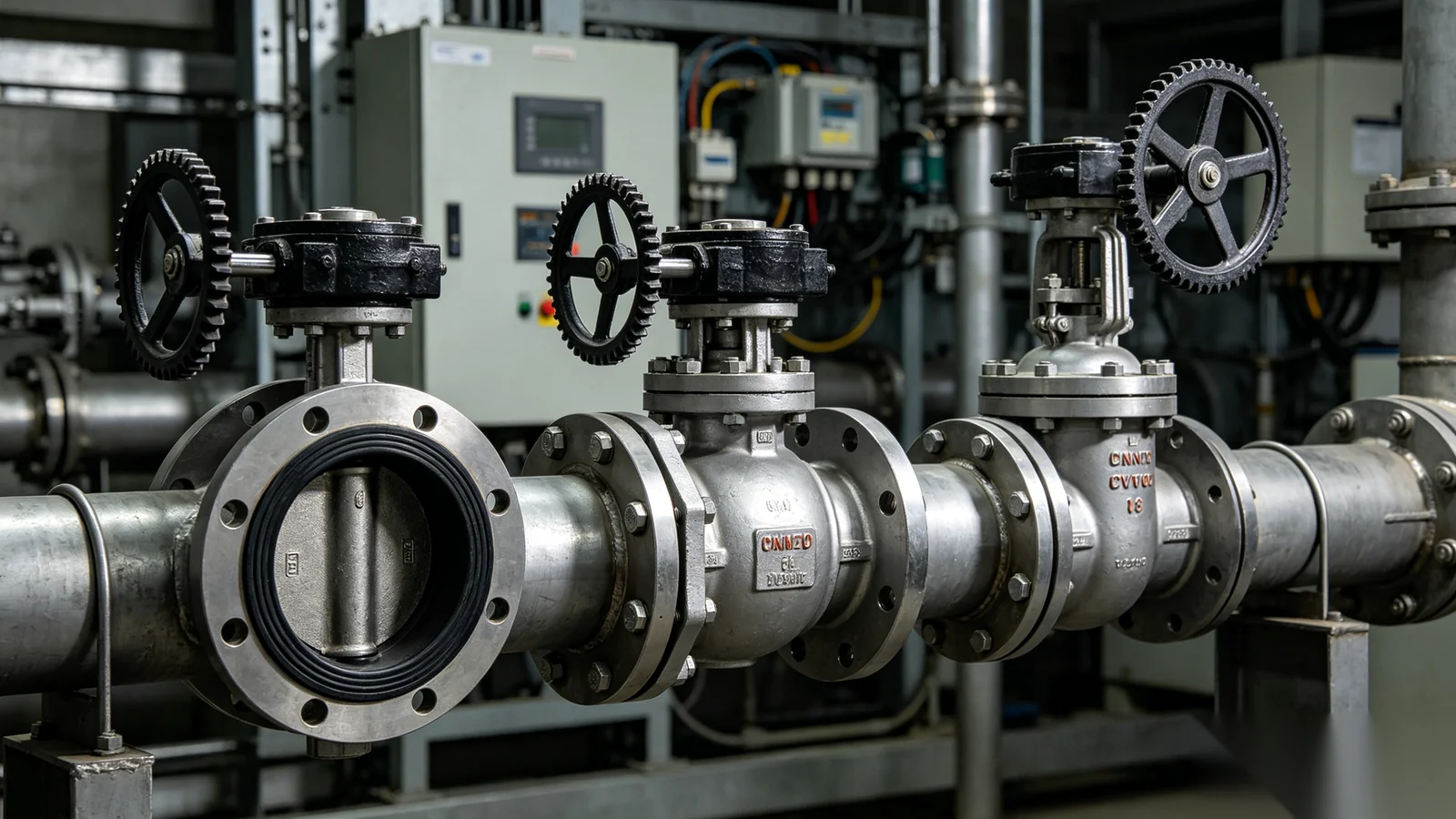
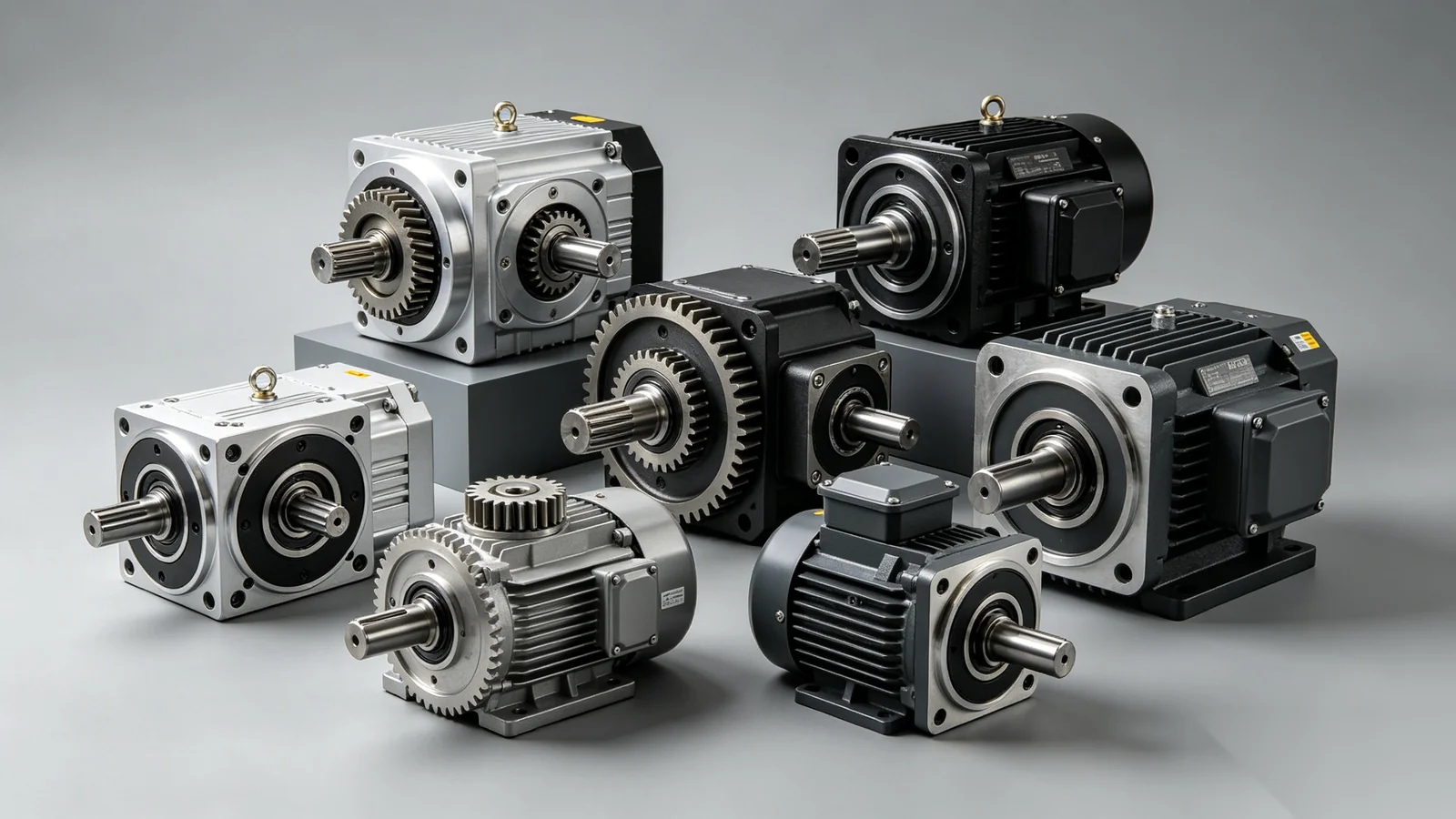
Reliable Gear Operators for Continuous Industrial Operation

Power generation assets operate continuously or on extended cycles; a seized or drifting valve can force derating, trip a unit, or complicate safe shutdown. Reliable gear operators provide self-locking worm stages that hold disc and gate position without continuous power — essential on large steam and cooling isolation valves. Mechanical integrity — hardened worms, aligned bearings, controlled backlash, and heat-resistant lubricants — translates to repeatable operation after thermal transients. Maintenance teams value standardized operators across a station so spares, procedures, and training stay consistent through decades of plant life. For owners, lifecycle cost favors gearboxes that tolerate elevated ambient temperature near steam lines, maintain sealing integrity, and accept actuator retrofit without replacing valve topworks.

Heavy Duty Valve Control in Energy Infrastructure

Energy infrastructure increasingly combines manual gear operators with electric actuators and supervisory control for remote operation, coordinated shutdown, and optimized auxiliary energy use. Heavy-duty valve automation packages must bridge quarter-turn and multi-turn valves, support declutchable overrides where specified, and present interfaces compatible with common actuator footprints on power projects. Torque transmission paths should tolerate defined stuck conditions without damaging stems or seats. Outdoor pipe racks, turbine halls, and hydropower galleries demand environmental ratings and conduit entries planned during EPC design. Procurement emphasizes traceability, submittal documentation, and alignment with power-industry practices on materials, testing, and continuous operation — automation-ready worm gearboxes let owners phase investment from manual construction to SCADA-integrated operation.

Plant Applications

Valve Applications in Power Generation Facilities

From main steam headers through condenser cooling and balance-of-plant distribution, power facilities deploy gate valves, butterfly valves, and globe valves for isolation, protection, and process control.

Application engineering starts with where the valve sits in the energy cycle and who must operate it under normal and upset conditions. Boiler and feedwater systems use gate and globe valves for tight shutoff; main steam and extraction lines favor large gate or butterfly valves for rapid isolation; cooling water systems handle high flow at lower temperature but large diameters; turbine auxiliary skids combine multiple valve types in compact layouts. Gear operator selection ties valve motion to mounting standard, handwheel effort at rated differential, and future electric actuation. The grid below summarizes common power plant valve roles and how heavy-duty gear operators support steam isolation, cooling water control, and high-pressure pipeline protection — a reference for OEM valve assemblers, EPC mechanical teams, and owner standards engineers reviewing submittals.

Steam Isolation Valves

Heavy-duty worm gear operators for main steam, extraction, and bypass isolation — torque-rated for high differential pressure and elevated temperature service near turbine halls.

Cooling Water Systems

Quarter-turn operators for condenser inlet, outlet, and cooling tower isolation — corrosion-aware finishes and continuous operation duty on large-diameter butterfly valves.

Boiler Feedwater Systems

Multi-turn gearboxes for feedwater gate and globe valves — thrust and torque aligned to high-pressure boiler boundary isolation and pump minimum flow bypass.

High Pressure Pipeline Valves

Reinforced operators for HP steam and feedwater piping — mechanical advantage and housing stiffness for pipeline valves on critical energy infrastructure boundaries.

Turbine Auxiliary Systems

Compact and standard operators for lube oil, seal steam, and auxiliary steam lines — supports turbine protection valves and maintenance isolation during outages.

Power Plant Distribution Networks

Isolation on auxiliary steam, compressed air, and plant utility headers — standardized gear operators for balance-of-plant distribution across thermal and hydro sites.

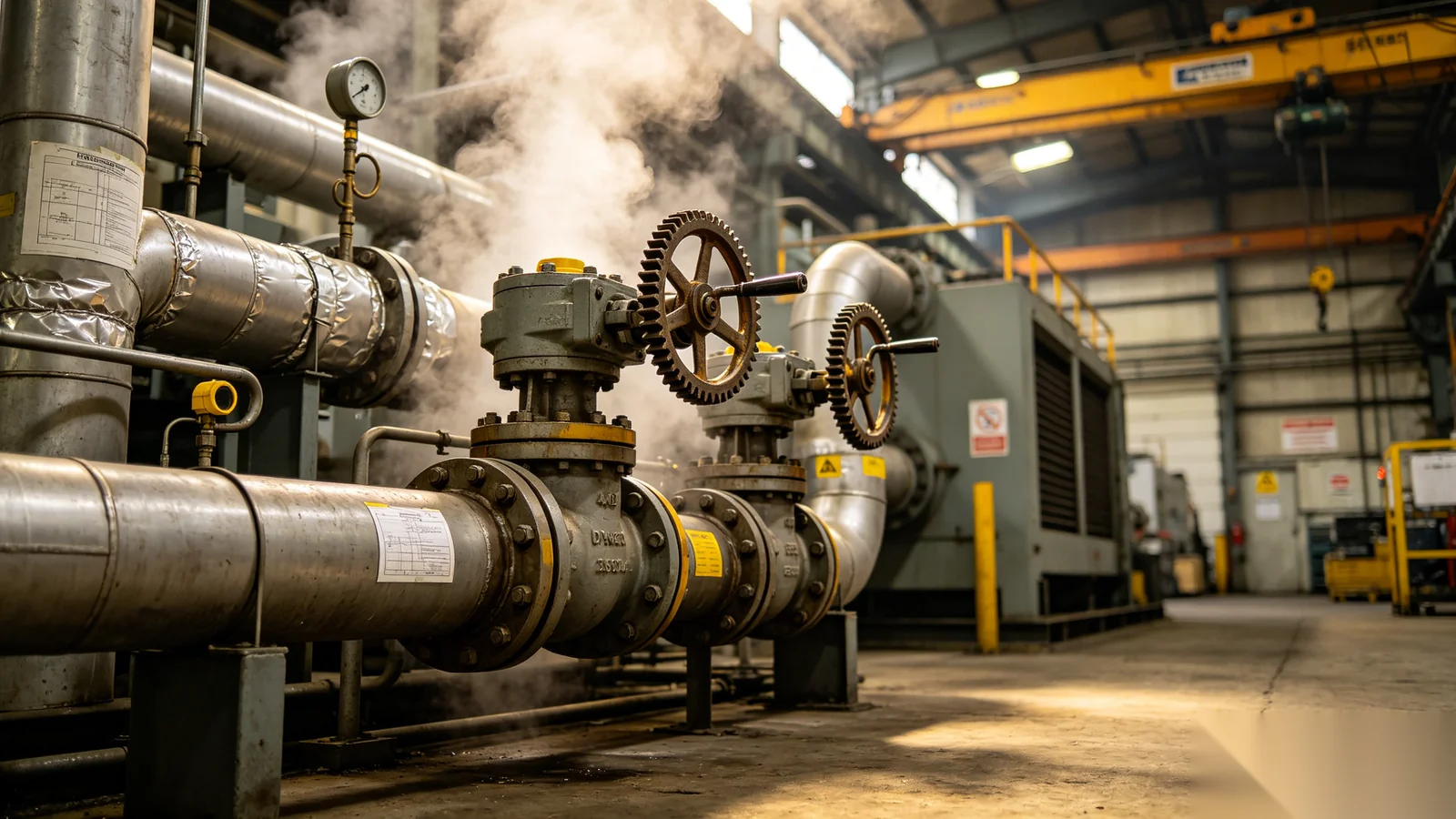
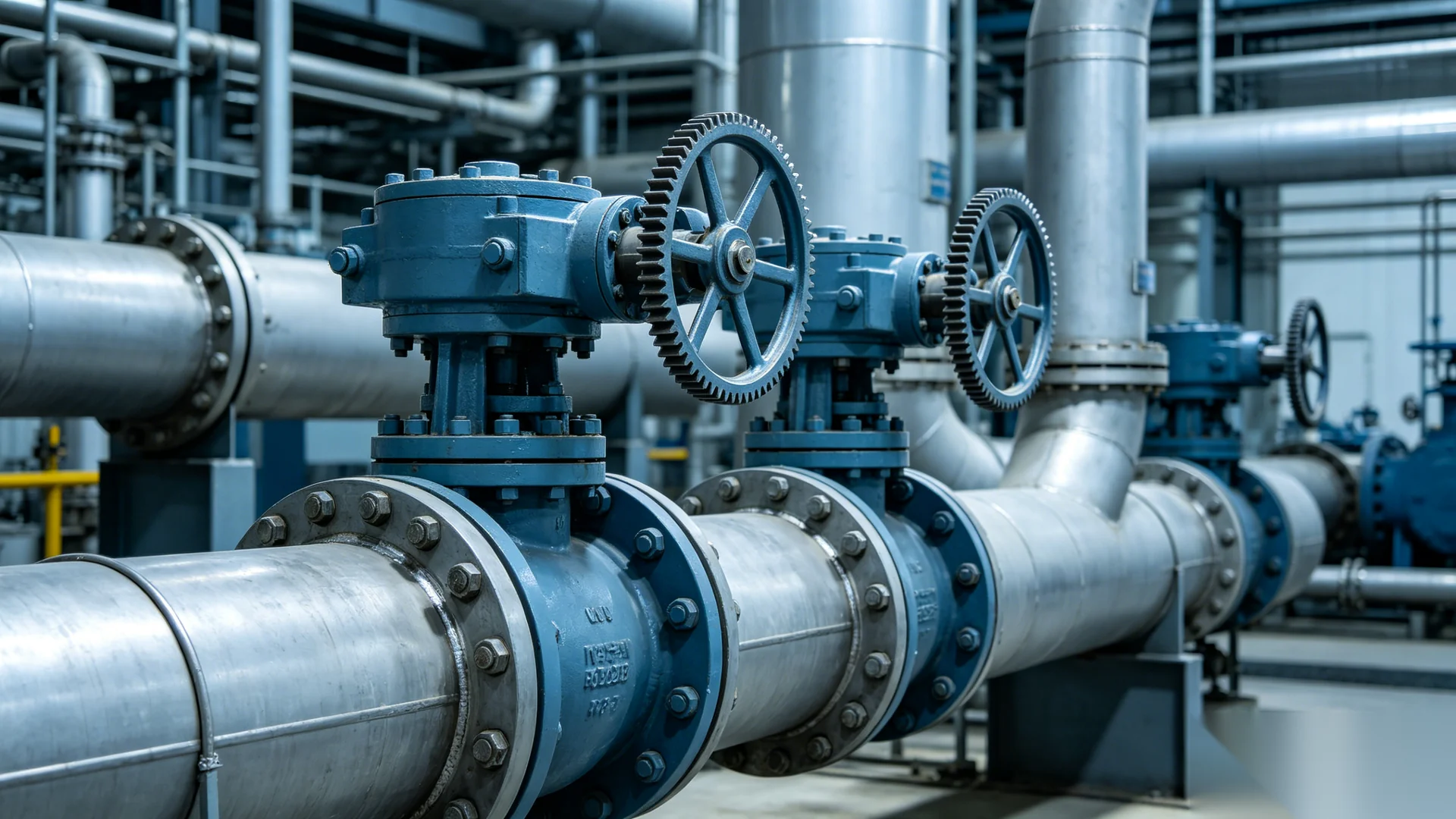
Gate and butterfly valves with gear operators in a power generation facility steam and cooling system
Plant DutyPower generation applications

Gearbox Engineering

Heavy Duty Gear Operator Solutions for Power Generation

High-torque worm gearboxes, quarter-turn and multi-turn configurations, and continuous-operation designs engineered for decades of power plant service.

Power plant gear operators translate handwheel or actuator input into controlled valve motion while resisting back-driving, thermal expansion effects, and environmental exposure in turbine halls and outdoor pipe racks. Quarter-turn solutions pair with butterfly and ball valves on cooling and utility lines; multi-turn units serve gate and globe patterns on steam and feedwater service; self-locking worm stages are standard for position hold without continuous power during normal operation. Heavy-duty torque transmission uses hardened worms, aligned bearings, and housings machined for stiff mounting to ISO 5211 patterns. Continuous operation configurations address frequent cycling on auxiliary lines and long static holds on main isolation valves. The feature grid outlines gearbox capabilities most referenced in power generation specifications and OEM data sheets for energy projects worldwide.

High Torque Worm Gear Operators

Output torque staged for large steam and HP isolation valves — ratio families matched to break and end torque with safety margins for power plant differential pressure.

Multi-turn Valve Systems

Bevel and worm drives for gate valves requiring multiple rotations — thrust capacity aligned to rising stem loads on boiler feedwater and steam drain lines.

Quarter-turn Valve Automation

90° worm gear operators for butterfly valves on cooling water and utility headers — self-locking geometry for position hold without brake power.

Self-locking Gear Mechanisms

Worm-worm wheel pairs hold valve position under flow-induced torque — critical for steam isolation and large cooling line butterfly valves.

Heavy Duty Torque Transmission

Reinforced housings and bearing layouts for high-torque power plant headers — bench verification available when project ITPs require traceable torque records.

Continuous Operation Configurations

Designs for auxiliary cycling duty and long-hold main isolation — heat-resistant lubrication and bearing selection for sustained energy infrastructure operation.

Heavy duty worm gear operator mounted on a high-pressure valve in a power plant
High TorqueGear operator solutions

Harsh Service Engineering

High Temperature and High Pressure Protection Systems

Power generation environments combine elevated temperature on steam lines, high pressure on boiler and feedwater boundaries, thermal cycling, and outdoor exposure on cooling systems — all stressing gear operator housings, seals, and lubricants. Protection strategy must address radiant heat near steam piping, pressure-class mechanical loads transmitted through stems, and long-term durability when maintenance windows are narrow. Industrial sealing on covers and bearing entries reduces ingress of dust and moisture in turbine halls; material grades and clearances account for thermal growth without binding rotation. Specifiers should document design temperature, proximity to steam traces, and pressure class so protection features are engineered for the actual installation — not generic industrial defaults. The topics below detail high-temperature and pressure-resistant approaches engineers request on power project datasheets.

High Temperature Valve Protection

Steam-adjacent installations expose gear operators to elevated ambient temperature, radiant heat, and cyclic warm-up/cool-down during unit starts and stops. High temperature valve protection includes heat shields or standoff mounting where layouts permit, high-temperature greases and seals that maintain lubrication without premature hardening, and hardware grades that resist galling. Housing materials and clearances are selected to tolerate thermal expansion without seizing worms or bearings. Engineering submittals should state expected ambient and radiant conditions so protection measures — insulation clearance, shielding, or remote mounting extensions — are coordinated with valve and pipe stress analysis during EPC detail design.

Pressure-resistant Gearbox Systems

High-pressure steam and feedwater valves impose stem loads and seat forces that translate into substantial input torque at the operator. Pressure-resistant gearbox systems use stiff housings, adequate bearing span, and worm geometry sized for peak torque including safety factors — not merely running torque at zero differential. Flange and stem interfaces must preserve alignment under thrust on multi-turn applications. Bench torque verification supports claims made on datasheets for owner and insurer review. When combined with self-locking worm stages, pressure-resistant design ensures operators do not back-drive under unexpected differential or thermal lock-up conditions within defined limits.

Long-term Reliability in Harsh Energy Environments

Harsh energy environments — outdoor cooling yards, vibrating pipe racks, humid turbine basements — demand coatings, sealing, and inspection access planned for decades of operation. Long-term reliability pairs mechanical design with maintenance discipline: exercise programs for critical isolation valves, lubrication intervals compatible with plant outages, and spare operator strategies for high-consequence tags. Corrosion protection on outdoor cooling service complements high-temperature measures on steam lines. Documented assembly inspection, heat resistance checks where specified, and export-grade packaging preserve protection systems in transit to global power sites. Owners measure success in years between interventions, not initial purchase price alone.

Pressure-resistant gear operator with high-temperature protection near steam pipeline in power plant
HP / HTProtection systems

Smart Plant Systems

Automation and Remote Control Systems

Electric actuator compatibility, SCADA integration, and automated valve systems for modern thermal, hydro, and renewable energy facilities.

Automation transforms power plants from locally operated isolation to coordinated unit and balance-of-plant control. Electric actuators mount on gear operators or integrated topworks; DCS and SCADA systems poll position and status; interlocks tie to turbine protection, boiler safety, and emergency shutdown sequences. Successful integration requires mechanical compatibility — stem height, flange pattern, torque margin — plus electrical protocols understood by controls engineers. Smart plant infrastructure adds remote monitoring, exercise scheduling, and alarm management to reduce stuck-valve risk during critical operating modes. Gear operators remain the mechanical foundation: they must drive smoothly under actuator power, permit manual override during outages, and maintain position when power is removed. The blocks below outline automation capabilities referenced in power SCADA specifications and integrator checklists.

Electric Actuator Compatibility

ISO 5211 mounting and torque interfaces for multi-turn and quarter-turn actuators — stem alignment verified before installation on steam and cooling valves.

Remote Valve Monitoring

Position and status feedback through actuator packages — reduces exposure during high-temperature line work and supports centralized monitoring.

SCADA Integration

Control and feedback paths aligned with plant SCADA and DCS conventions — coordination with system integrators during FAT and commissioning.

Automated Power Systems

Automated open/close sequences for auxiliary and cooling systems — gear operators sized for coordinated plant startup and shutdown logic.

Emergency Shutdown Systems

Interfaces compatible with ESD and turbine trip logic — reliable final position on critical isolation valves during upset and protective actions.

Smart Plant Infrastructure

Foundation for digital energy assets — condition monitoring hooks and standardized topworks for phased automation on legacy thermal units.

Electric actuator and gear operator integrated with power plant SCADA control room systems
SCADA ReadyRemote control

Energy Systems

Steam, Cooling and Energy Infrastructure Applications

Power generation facilities integrate steam generation, expansion through turbines, rejection of heat via cooling systems, and auxiliary energy networks that keep units available. Valve gear operators appear on every boundary: main steam stops, extraction lines, condenser cooling, boiler feed pumps, and hydropower penstock isolation. Each subsystem imposes different temperature, pressure, and duty on operators — steam lines prioritize high-temperature torque and sealing; cooling systems emphasize large quarter-turn valves and outdoor durability; hydropower adds long-stroke, high-head, and safety-isolation expectations. Engineering teams should map valve tags to subsystem requirements early in EPC layout to avoid uniform underspecification. The following topics connect gear operator strategy to steam, cooling, and renewable energy infrastructure roles.

Steam System Valve Control

Steam system valve control spans boiler outlet isolation, turbine inlet and bypass, extraction for process or heating, and drains/traps on condensate recovery. Operators on steam service must tolerate thermal transients during startup and trip events while maintaining position when commanded closed. High-pressure pipeline valves at unit boundaries often carry the highest torque and consequence-of-failure ratings on the plant. Gear ratio and housing selection should reference steam pressure class, valve type, and whether the valve is motor-operated with manual override or primarily manual with future actuation. Coordination with piping stress and support design prevents misalignment that would load the gearbox beyond design intent during hot operation.

Cooling Water and Auxiliary Infrastructure

Cooling water and auxiliary infrastructure move large volumes at lower temperature than steam but across very large valve diameters — condenser circulating water, cooling tower isolation, and chemical treatment lines. Butterfly valves with quarter-turn worm gear operators dominate; corrosion protection and UV-stable coatings matter on outdoor racks. Auxiliary steam, compressed air, and fuel gas headers use smaller valves with frequent operation — operators should support cycling duty without accelerated wear. Pump discharge and tower isolation valves often require remote operation from the control room, making automation-ready topworks a standard EPC specification rather than an upgrade.

Hydropower and Renewable Energy Applications

Hydropower and renewable energy applications extend gear operator requirements to penstock isolation, spiral case drains, and balance-of-plant systems on solar thermal or biomass units where steam or high-temperature fluids appear. Hydropower emphasizes reliable manual and motorized isolation under high head; renewable hybrids may combine conventional steam auxiliaries with different maintenance cadences. Gear operators should be documented for environmental exposure — humid galleries, altitude, and seismic restraints on large valves. Export projects for international hydro and thermal sites add logistics and local inspection expectations; engineering documentation and torque tables support owner acceptance across diverse energy portfolios.

Steam pipelines and cooling water infrastructure with valve automation in power generation facility
Steam / CoolingEnergy infrastructure

Project Delivery

OEM and EPC Support for Power Generation Projects

Power generation projects flow through utility owners, international EPC contractors, and valve OEMs — each needing documentation, manufacturing flexibility, and technical alignment with plant standards. EPC schedules demand tagged submittals, torque tables, and installation drawings matched to P&ID valves on steam and cooling systems; OEM programs need harmonized gear operators across gate, globe, and butterfly lines for factory assembly; export energy projects add packaging, certification, and multilingual documentation. CAD support accelerates clash checks in congested pipe racks and turbine halls. Engineering documentation — material lists, temperature ratings, and interface drawings — reduces RFIs during construction when outage windows are costly. The following topics describe how partners engage on thermal, hydro, and international power infrastructure work.

Support for Power Plant EPC Contractors

EPC contractors on power plant projects require submittals owners and lenders can review against specifications — torque data, mounting dimensions, temperature ratings, and coating systems stated per tag on steam, feedwater, and cooling valves. Batch delivery aligned to construction and outage phases reduces yard storage and preserves protective finishes. Factory tests and inspection records support QA on critical isolation tags. Engineering coordinates with EPC mechanical leads on valve lists, clarifies actuator interface questions before fabrication, and aligns marking with owner asset systems. Whether the scope is a new thermal unit, combined-cycle block, or hydropower electromechanical package, project support emphasizes schedule-aware production and transparent documentation.

OEM Valve Automation Solutions

Valve OEMs integrate gear operators at factory or regional assembly centers — requiring consistent ISO 5211 patterns, ratio families, and labeling across product lines sold into power markets. OEM programs include high-temperature hardware options, harmonized actuator mounting pads, and private-label documentation for global energy customers. Torque steps rationalized across a catalog reduce SKU count while covering typical steam and cooling torque bands. Collaboration includes prototype fit-up on customer valves, drawing approval, and locked releases for serial production. OEM manufacturing support treats gear operators as part of the valve BOM — improving quality and reducing field adaptation on power generation orders.

Engineering Documentation and Technical Support

Engineering deliverables include installation drawings, 3D models for layout, torque and effort tables, and maintenance instructions for owner manuals and O&M systems. Technical support responds to bid clarifications, reviews actuator compatibility on high-pressure tags, and assists commissioning with stroke verification and override procedures during unit startup. Export power generation projects receive collated certificates and packing lists aligned to site receiving and customs. When specifications conflict — for example, radiant heat limits versus actuator envelope — engineering documents resolution before manufacture. This approach reduces rework in turbine halls and pipe racks where access is difficult during commissioning.

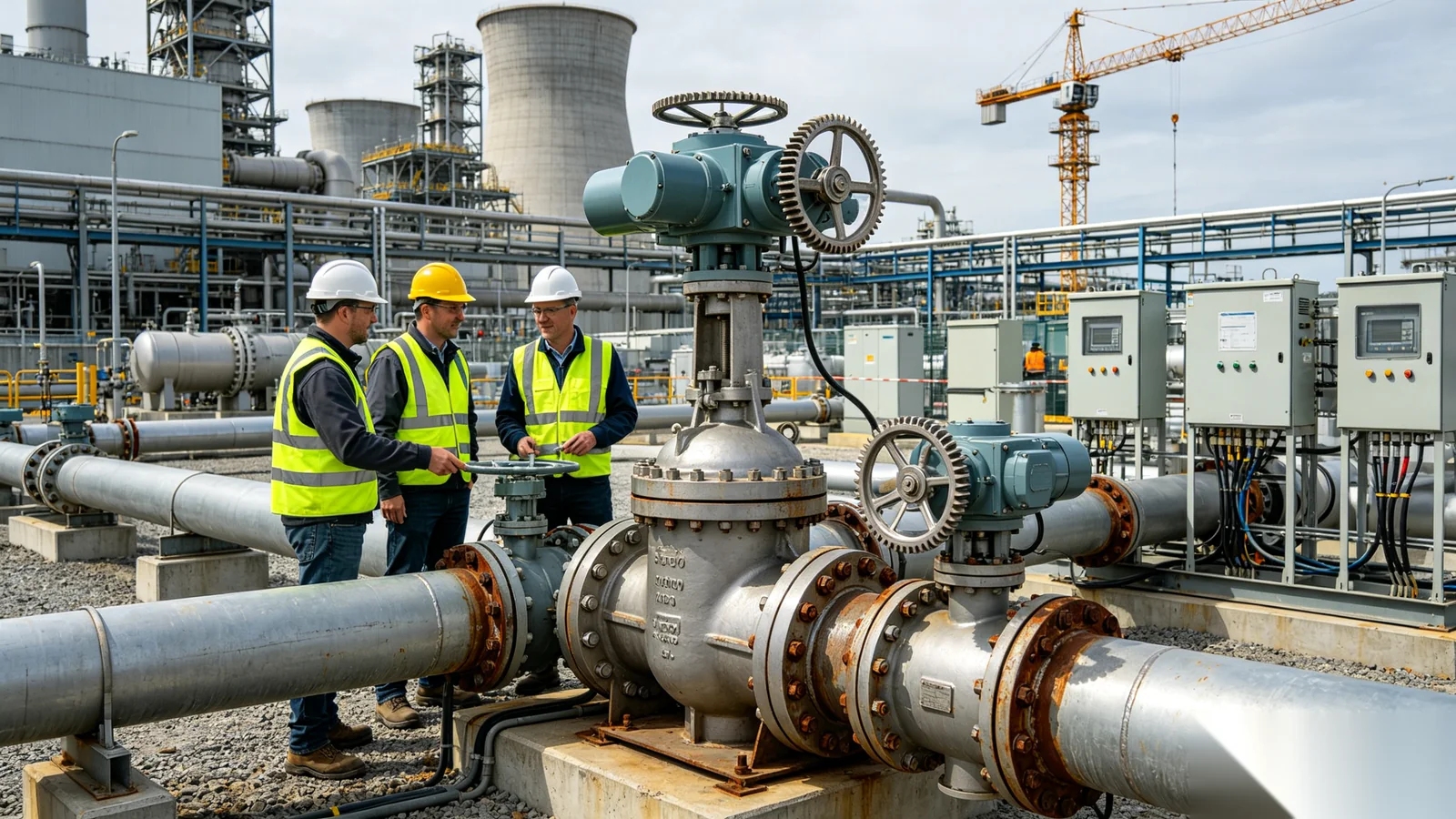
Engineering team reviewing power generation EPC valve automation submittals and CAD documentation
EPC / OEMProject support

Production Quality

Manufacturing and Quality Assurance for Power Industry Applications

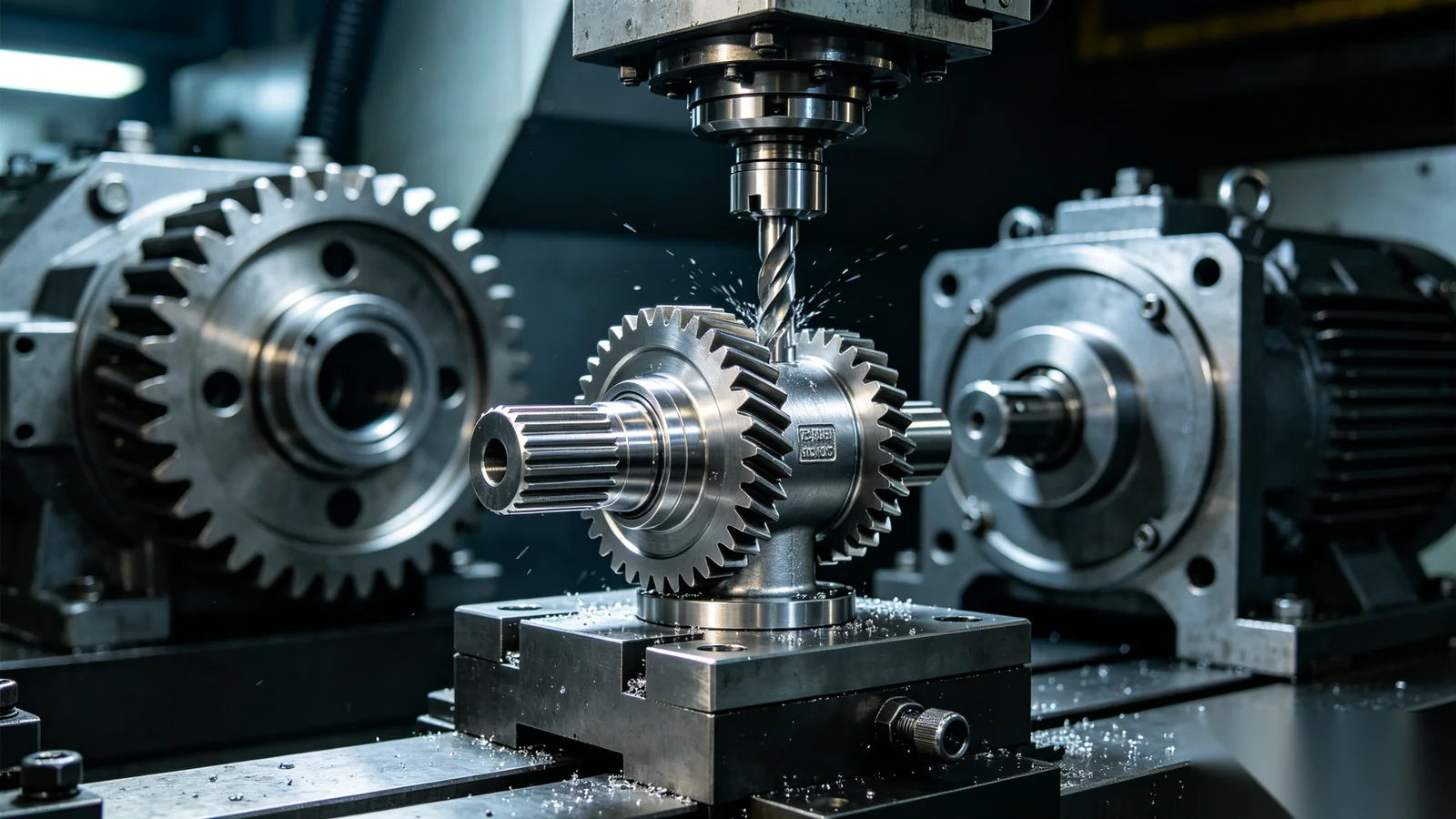
Precision machining, torque verification, heat resistance inspection, and export quality control — manufacturing aligned to continuous power plant operation.

Power industry gear operators must be manufactured with the same rigor as the valves they drive: controlled machining, verified torque, inspected heat-resistant components, and traceable release. CNC machining produces housings, covers, and worms to drawing tolerances; assembly confirms rotation, backlash, and handwheel effort; testing validates torque and, where specified, temperature-related performance; export packing protects finishes en route to global energy sites. Quality assurance integrates with ISO 9001 procedures — incoming material checks, in-process dimensions, and final bench tests — so EPC inspectors and OEM auditors find consistent evidence. The manufacturing grid summarizes process capabilities most cited when qualifying suppliers for thermal, hydro, and international power generation projects.

Precision CNC Machining

Housings, covers, and worms machined to released drawings — ISO 5211 interfaces and bearing bores held for stiff alignment under high-torque plant duty.

Torque Verification

Bench testing confirms output torque and handwheel effort — traceable to batch or tag when power project inspection test plans require.

Heat Resistance Testing

Validation of seals, lubricants, and hardware for elevated temperature service — supports submittals on steam-adjacent gear operator installations.

Heavy Duty Gear Inspection

Dimensional and functional checks on worms, bearings, and housings — prevents field issues on critical high-pressure isolation valves.

Assembly Quality Control

Rotation, backlash, and sealing verified before release — consistent assembly discipline across power industry production batches.

Export Compliance Systems

Marking, documentation, and protective packing for international thermal, hydro, and energy infrastructure shipments.

Manufacturing and quality inspection of worm gear operators for power generation industry
ISO 9001Quality assurance

Client Value

Why Power Generation Clients Choose Our Valve Gear Operator Solutions

Utility owners, EPC contractors, and valve OEMs select gear operator partners based on high-temperature application understanding, heavy-duty mechanical evidence, automation readiness, and responsive engineering — not generic industrial catalog language. Power generation imposes a distinct risk profile: grid-critical availability, safety interlocks, and assets designed for continuous operation over thirty to forty years. Clients value suppliers who document steam and cooling duty clearly, who verify torque for high-pressure tags, and who support SCADA integration without forcing premature topwork changes. Export experience matters when projects span regions with different standards and logistics. The points below summarize why energy industry stakeholders align valve gear operator procurement with our engineering and manufacturing approach.

High temperature application expertise

Engineering focus on steam-adjacent and elevated ambient duty — not generic ambient-temperature catalog specs.

Heavy duty gearbox engineering

High-torque worm stages and stiff housings for HP steam and feedwater isolation valves.

Continuous operation reliability

Designs for long-hold isolation and auxiliary cycling on baseload and cycling thermal units.

Industrial automation support

Electric actuator and SCADA-ready topworks with documented interfaces for plant controls teams.

EPC project experience

Tagged submittals, CAD releases, and schedule-aware production for power EPC scopes.

Precision manufacturing systems

CNC machining, torque verification, and heat resistance inspection under ISO quality procedures.

Global export capability

Documentation and packing for international thermal, hydro, and energy infrastructure projects.

Technical engineering consultation

Bid, submittal, and commissioning support for gear operator and actuator coordination on power tags.

Common Questions

Frequently Asked Questions

What valve types are commonly used in power generation systems?+

Power generation facilities typically use gate valves for tight shutoff on steam, feedwater, and drain lines; butterfly valves for large-diameter cooling water and utility headers; and globe valves for throttling and control on auxiliary systems. Check valves protect turbines and pumps; ball valves appear on smaller utility and instrument connections. Gear operators match valve motion: quarter-turn worm gearboxes for butterfly and ball valves, multi-turn units for gate and globe valves. Selection should reference design pressure and temperature, operating torque with safety factors, and whether electric actuation or SCADA control is required at commissioning or a later upgrade phase.

Do you provide heavy duty gear operators for steam systems?+

Yes. Heavy-duty worm gear operators are supplied for steam isolation, extraction, bypass, and auxiliary steam service with torque staging for high differential pressure and mechanical designs suited to elevated ambient temperature near steam piping. Submittals document ratio, output torque, mounting dimensions, and protection features such as heat-resistant lubricants and hardware. Engineering support coordinates with valve OEMs and EPC teams on tag lists and actuator interfaces. Steam system operators are treated as critical mechanical assets — not light-duty general industrial hardware — with verification available when project quality plans require bench torque records.

Can your gear operators operate in high temperature environments?+

Gear operators for power generation can be configured for high temperature environments using appropriate seals, greases, clearances, and hardware grades, plus layout measures such as standoff mounting or shielding where radiant heat is significant. Specifications should state expected ambient and installation conditions — steam-adjacent rack versus outdoor cooling yard — so protection is engineered deliberately. Heat resistance testing and documentation support owner review on projects that require evidence beyond datasheets. High temperature capability is coordinated with pressure-resistant mechanical design because steam and HP feedwater tags often impose both thermal and torque severity.

Are electric actuator and SCADA integrations supported?+

Gear operators are manufactured automation-ready with ISO 5211 mounting, drive interfaces, and torque margins compatible with common electric actuators used on power projects. SCADA and DCS integration occurs through actuator and plant controls architecture — position feedback, open/close commands, interlocks, and alarms — while the gearbox provides reliable mechanical transmission and manual override during outages. Engineering support reviews actuator models, stem dimensions, and control signals during bid and submittal to avoid interface conflicts in turbine halls and pipe racks. Phased programs often install manual operators at construction and add actuators when unit controls are commissioned.

Do you support EPC and international power generation projects?+

EPC and international project support includes tagged submittals, torque tables, installation and 3D CAD data, temperature and coating documentation, batch production aligned to construction schedules, and export packing with certificates. Valve OEMs receive harmonized mounting patterns and private-label options; EPC teams receive engineering responses for specification clarifications and FAT requirements. Technical support continues through commissioning for stroke checks and override procedures during unit startup. Whether the scope is a thermal power plant, hydropower station, or international energy infrastructure export, delivery emphasizes documentation transparency and manufacturing traceability expected on grid-critical valve automation.

Need Reliable Valve Gear Operators for Power Generation Projects?

Share your valve lists, steam and cooling service data, and automation goals — our engineering team aligns heavy-duty worm gear operator solutions with thermal, hydro, and energy infrastructure scopes. OEM cooperation, EPC project support, and export documentation are available for international power generation projects. Request a consultation to review torque requirements, high-temperature protection, actuator interfaces, and manufacturing schedules before your next unit upgrade or greenfield bid.