
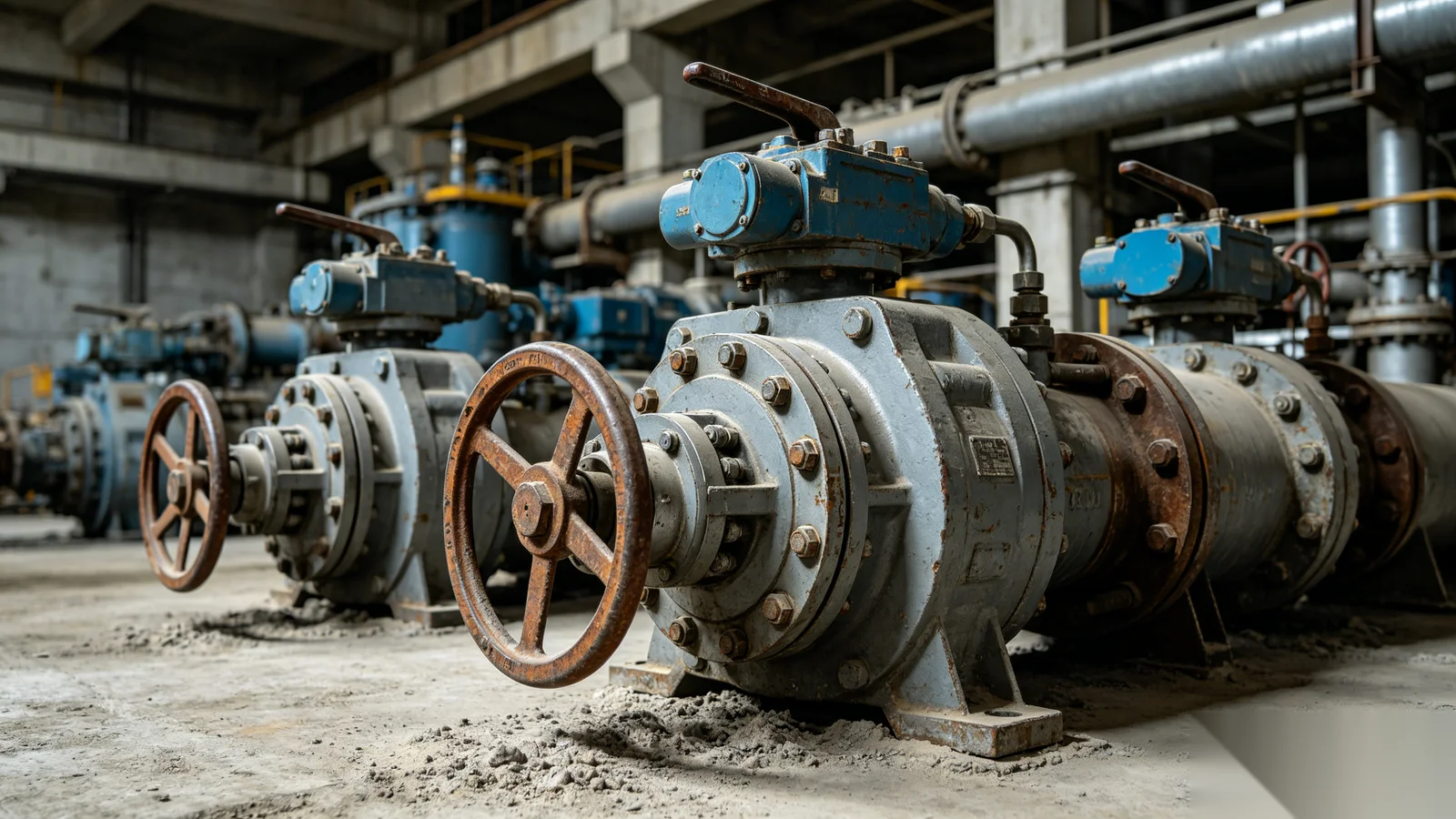
Water Treatment & Municipal
Coated steel or stainless with IP67 for outdoor vaults and washdown filtration areas.
Engineering Selection · Material & IP Protection
Select valve gear operators by material grade and ingress protection so they survive the installation environment for decades. Carbon steel suits sheltered indoor service; stainless steel and enhanced coatings address coastal, chemical, and washdown areas; IP67 and IP68 ratings (per IEC 60529) govern dust and water ingress. This guide matches material and protection to outdoor, buried, marine, and corrosive duty.
Fundamentals
Environmental exposure often dictates valve gear operator longevity more than torque margin alone. Moisture entering a housing corrodes gears and bearings that passed factory inspection; an undersized coating system fails first at fasteners and seams. Selecting material and ingress protection for the worst credible site condition — not average weather — prevents premature internal corrosion and seal failure.
Two independent decisions govern environmental fitness: the housing and internal material grade (cast iron, ductile iron, stainless steel, plus coatings) and the ingress protection rating defined by IEC 60529. Together they determine whether an operator is fit for indoor, exposed outdoor, buried, or submerged marine service.
Material Options
Material selection balances strength, corrosion resistance, and cost. The comparison below summarizes the common housing material classes and their typical environment fit.
General material guidance only. Specific grades, coating systems, and thickness are confirmed per project — no product-specific values are implied.
Protection Ratings
Ingress protection (IP) per IEC 60529 expresses how effectively an enclosure excludes solids and water. The first digit covers dust; the second covers water. For valve operators the practical distinction is between temporary water resistance and continuous submersion.
IP digit meanings are defined by IEC 60529. IP68 conditions (depth and duration) are agreed per application. No product test values are implied.
Buried and submerged operators demand IP68 sealing plus corrosion-resistant materials — carbon steel with paint is rarely adequate. Specify sealed shafts, potted entries where applicable, and stainless or heavily coated externals for vault and below-grade installations.
By Sector
Coated steel or stainless with IP67 for outdoor vaults and washdown filtration areas.
316 stainless and enhanced coatings for salt spray, humidity, and hydrocarbon exposure; IP68 where submerged.
Material upgrades and seal compatibility for aggressive atmospheres near valve stems and packing.
Selection Method
Material and IP selection collects the environmental factors that drive longevity. Match to the worst credible site condition.
Detailed specifications — output torque, gear ratio, ISO 5211 flange class, drive bush bore, weight, and material grades — are confirmed per project and configuration. Detailed specifications available on request — request a datasheet.
Request a DatasheetTell us the installation environment — indoor, outdoor, buried, marine, or chemical — and our engineers recommend material grade, coating system, and IP67 or IP68 protection for long service life. Custom material and sealing configurations are confirmed before manufacture.
Common Questions
Both are dust-tight (first digit 6). IP67 resists temporary immersion — typically to 1 m for about 30 minutes per IEC 60529 — suiting exposed outdoor and washdown areas. IP68 covers continuous submersion at a specified depth and duration agreed per application, suiting buried vaults, flooded chambers, and marine splash zones. IP68 selections are usually paired with corrosion-resistant materials.
Use stainless steel where corrosion would compromise a coated carbon-steel housing: coastal and marine atmospheres, chemical exposure, frequent washdown, and hygiene-sensitive utilities. Grade 304 handles general corrosive atmospheres; 316 adds chloride resistance for coastal and marine service. Stainless is also chosen where coating maintenance is impractical over the asset life.
Yes. Offshore service combines material grade (commonly 316 stainless), enhanced coating systems, and IP67 or IP68 sealing against salt spray, humidity, and temperature cycling. Seal materials are selected for the temperature range, and external fasteners are upgraded. Configurations are confirmed against the specific platform environment before manufacture.
Common systems include epoxy primers, polyurethane topcoats, and specialty coatings that extend carbon-steel service life in harsh outdoor environments. Coating choice depends on exposure, expected maintenance interval, and whether the asset is sheltered, exposed, or buried. Coating system and thickness are specified per project rather than as a fixed product value.
Yes. Housing material, internal component grade, seal material, and coating system are configured to the application, including stainless construction and combined material-plus-coating strategies for aggressive environments. Custom configurations are engineered with confirmation before manufacture — request a datasheet for a specific environment.