
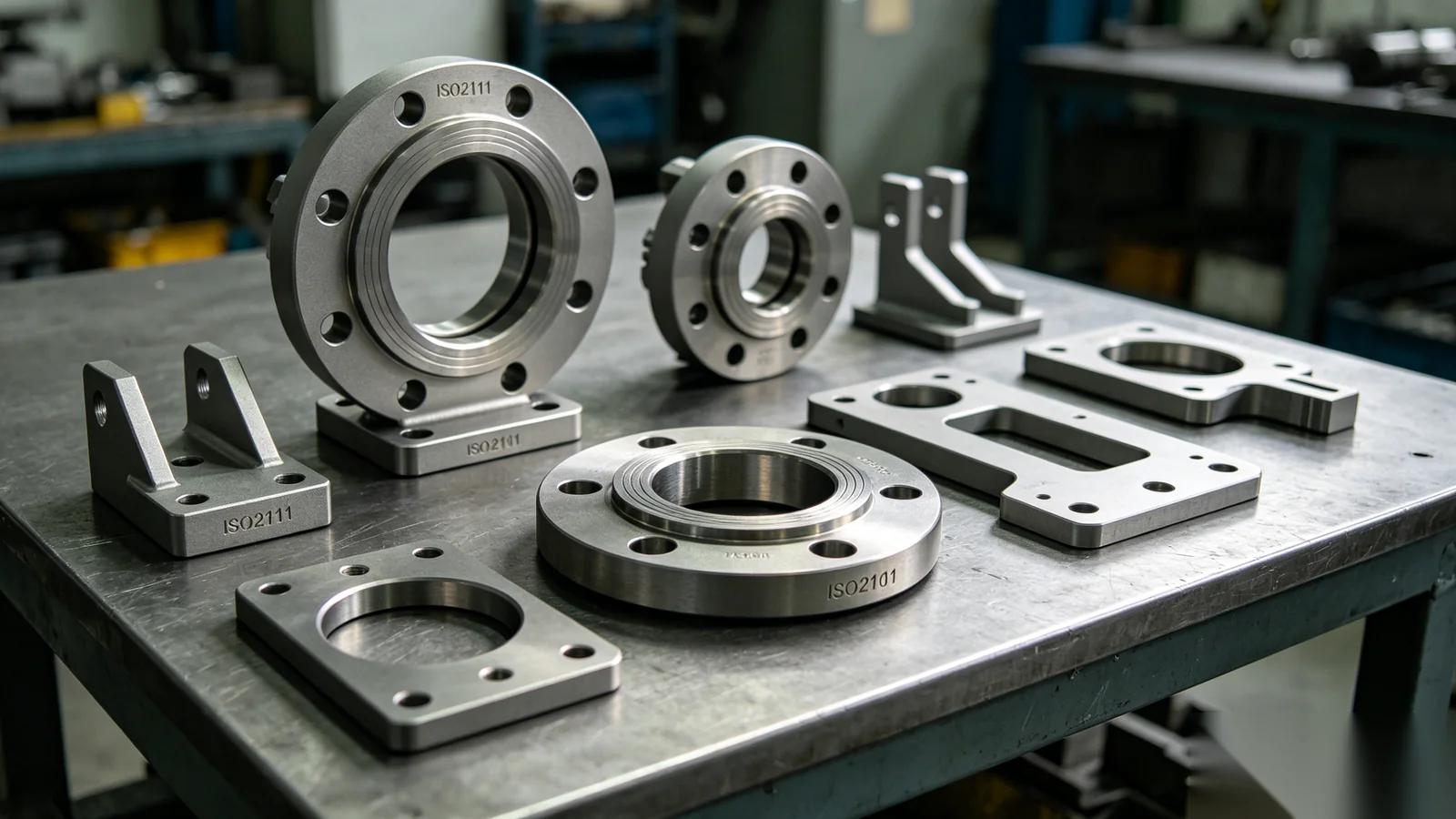
Butterfly Valve Mounting
ISO 5211 top flange with stem keyway or square drive; confirm disc clearance and indicator orientation.
Engineering Selection · ISO 5211 Mounting
Select valve gear operators by mounting interface so they install in hours, not days. ISO 5211 defines the flange dimensions, bolt patterns, and stem drive engagement between a valve gearbox and the valve topworks. This guide covers F-series flange sizes, drive bush and stem connections, adapter plates, and actuator-ready mounting for butterfly, ball, gate, and globe valves.
Fundamentals
Mechanical interface compatibility determines whether a valve gear operator installs cleanly or requires field rework. The mounting flange transfers reaction torque and locates the gearbox concentric to the valve stem; the drive bush engages the stem to transmit torque. A mismatch causes stem runout, accelerated packing wear, and indicator errors that often appear only after hydrotest.
ISO 5211 is the international standard that standardizes valve gear operator and actuator mounting. It specifies flange designations (the F-series), bolt circle diameters, thread sizes, and a star or square drive coupling so that operators and valves from different manufacturers can be matched predictably.
ISO 5211 designates mounting flanges as F03, F04, F05, F07, F10, F12, F14, F16, F25, F30, and F35 — each defining a bolt-circle diameter (PCD) and fixing thread size. The standard also defines drive couplings (square, double-square, and others). Matching the valve top-flange designation to the operator base flange — or specifying an adapter plate when they differ — is the core of mounting selection.
Standards Reference
The ISO 5211 F-series defines a fixed family of mounting flanges. The reference below lists the standard flange designations and their nominal bolt-circle diameters (PCD) and fixing thread sizes as published in the standard. Confirm the valve top-works flange against the operator base flange before finalizing the layout.
Values are the nominal dimensions published in ISO 5211 for the standard F-series flanges (public standard, not product-specific). Refer to the current ISO 5211 revision for full tolerances and drive square dimensions.
The drive bush (coupling) inside the operator transmits torque to the valve stem. Common interfaces include square, double-square, and keyed bores, machined to the valve stem dimension. Engagement length and bush material must match stem torque capacity; under-engaged or oversized bores round off the stem under load.
By Valve Type
ISO 5211 top flange with stem keyway or square drive; confirm disc clearance and indicator orientation.
Direct ISO 5211 mounting or mounting kit (bracket plus coupling) when the valve has a bare stem.
Rising-stem valves use multi-turn operators with thrust capacity and a stem nut rather than a fixed drive bush.
Transition plates bridge differing valve and operator bolt patterns; thickness and stiffness calculated for load transfer.
Square, double-square, and keyed drives sized for stem torque capacity with adequate engagement length.
ISO 5211 base allows later swap to electric or pneumatic actuators without changing the valve interface.
Selection Method
Mounting selection collects the interface data that determines flange size, drive bush bore, and whether an adapter is required. Confirm each factor below against valve drawings before release.
Custom Support
Non-standard flanges, special drive bushings, and large-valve mounting are handled as custom engineering with CAD drawings of the interface, adapter design, and load review before manufacture. OEM programs lock mounting standards across a product family for consistent spares and installation.
Detailed specifications — output torque, gear ratio, ISO 5211 flange class, drive bush bore, weight, and material grades — are confirmed per project and configuration. Detailed specifications available on request — request a datasheet.
Request a DatasheetSend valve top-works drawings or the ISO 5211 flange designation and stem data — our engineers verify flange, drive bush, and adapter requirements and return dimensioned mounting drawings. Custom flanges and drive bushings are released through CAD approval before manufacture.
Common Questions
ISO 5211 is the international standard that defines the mounting interface between part-turn valves and their operators or actuators. It specifies flange designations (the F-series such as F05, F07, F10), bolt-circle diameters, fixing thread sizes, and drive couplings. Matching the valve top-flange designation to the operator base flange lets gearboxes and valves from different makers be combined predictably.
Identify the valve top-works ISO 5211 flange designation and stem dimension, then choose an operator with a matching base flange and drive bush. Where the valve and operator patterns differ, an adapter plate bridges them. The flange must also transfer the operating reaction torque, so very high-torque applications may step up to a larger F-size. Confirm against valve drawings before finalizing.
Yes. The drive bush (stem coupling) is commonly machined to the specific valve stem — square, double-square, or keyed — with engagement length matched to stem torque capacity. Custom bores and bespoke stem drives are produced as engineered items with CAD confirmation before manufacture to avoid stem rounding under load.
Yes. An ISO 5211 base allows the same valve interface to accept a handwheel operator now and an electric or pneumatic actuator later without changing the valve mounting. Actuator-ready topworks, mounting kits, and declutchable override layouts are configured so actuator stall torque stays within the operator and stem capacity.
Yes. OEM programs standardize ISO 5211 patterns, adapter families, and drive bush conventions across a valve product line so installation and spares stay consistent. Non-standard flanges and special interfaces are engineered with revision-controlled CAD drawings released before serial production.