Custom Reduction Ratio Design
Reduction ratio engineered to balance output torque, operating speed, and input effort.
Custom Engineering · Gear Ratio
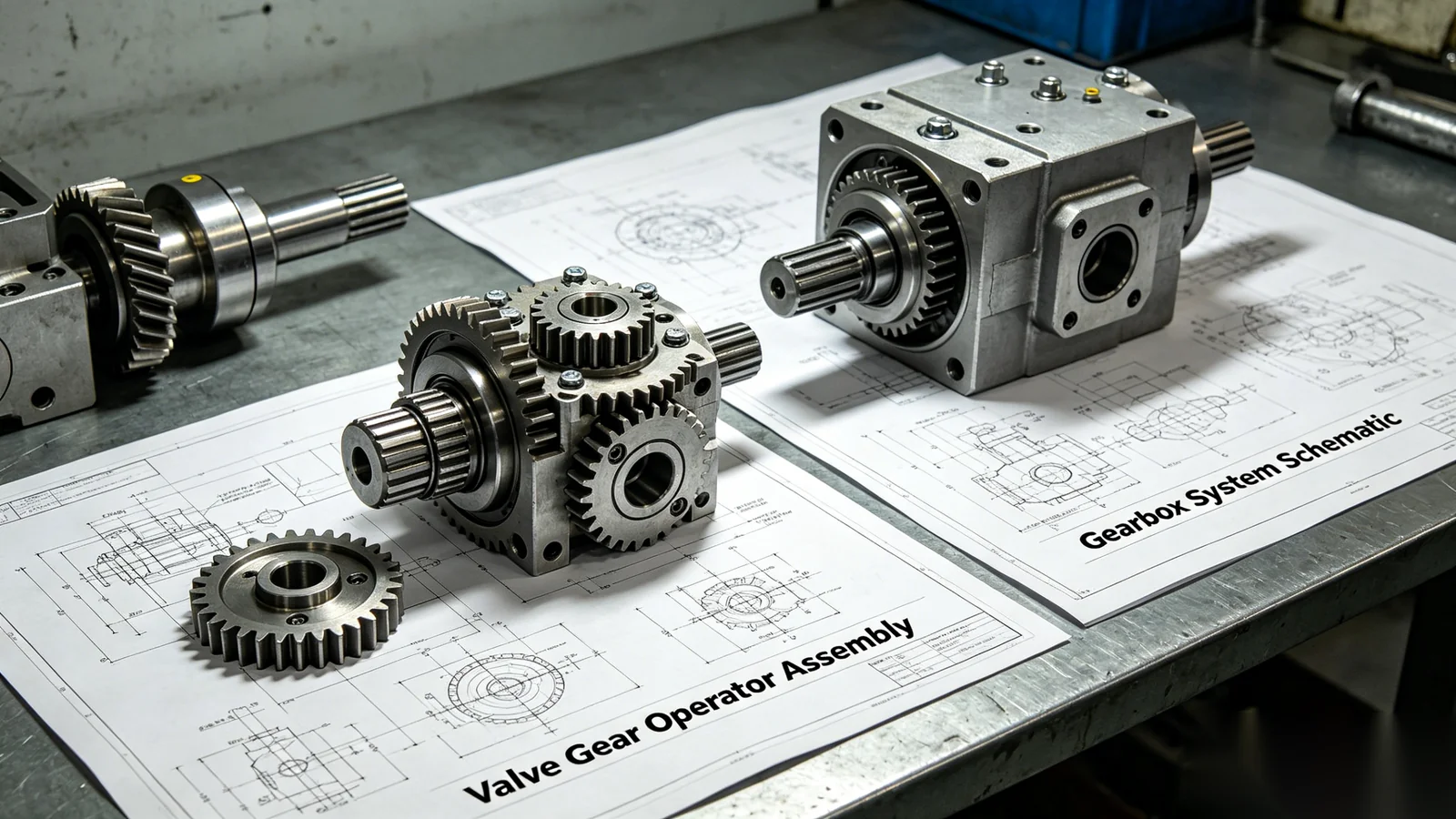
Custom ratio gearboxes are engineered to a specific reduction ratio — the trade-off between output torque and operating speed. A higher ratio raises torque and the number of input turns; a lower ratio speeds operation at the cost of torque. We design custom gear ratios for worm gear operators where standard reductions do not balance torque, speed, and rim force for the application.
Overview
A custom ratio gearbox is a worm gear operator built to a specific reduction ratio chosen to balance output torque against operating speed and input effort. Gear ratio is the relationship between input turns and output rotation; in a worm operator it also influences whether the unit is self-locking.
Ratio sets the torque-versus-speed trade-off. A higher reduction multiplies output torque and lets a small handwheel or actuator move a large valve, but requires more input turns. A lower reduction operates the valve faster with less effort per turn but delivers less torque. The correct ratio keeps input rim force or actuator torque within limits while meeting operating-time targets.
Capabilities
Reduction ratio engineered to balance output torque, operating speed, and input effort.
Ratio set against required torque and acceptable number of turns or operating time.
Reinforced worm and worm-wheel sets for high-load, large-valve service at the chosen ratio.
Structural and bearing upgrades where high ratio meets high stem load.
Worm lead angle selected to hold valve position without back-driving where required.
Custom ratios available across quarter-turn and multi-turn architectures.
Design Inputs
Custom ratio design starts from the operating requirements that set the torque-speed balance.
Inputs used to engineer a custom ratio. Output values are confirmed per design, not implied here.
Detailed specifications — output torque, gear ratio, ISO 5211 flange class, drive bush bore, weight, and material grades — are confirmed per project and configuration. Detailed specifications available on request — request a datasheet.
Request a DatasheetApplications
Large valves needing high ratio for torque while keeping operating time acceptable.
Distribution and treatment valves balancing torque and operating speed.
Process and cooling valves where ratio sets manual or actuated operating time.
Ratios matched to actuator output speed for coordinated valve control.
Tell us the required torque and operating-time target — our engineers select a reduction ratio that balances torque, speed, and input effort, and quote a custom ratio worm gearbox with CAD submittals before manufacture.
Common Questions
A custom ratio gearbox is a worm gear operator built to a specific reduction ratio chosen to balance output torque against operating speed and input effort. Gear ratio relates input turns to output rotation; the right ratio keeps handwheel rim force or actuator torque within limits while meeting operating-time targets for the valve.
Yes. Reduction ratio is engineered to the application using selected worm and worm-wheel sets, including higher ratios for more output torque or lower ratios for faster operation. Self-locking worm geometry can be specified where the valve must hold position. The ratio is confirmed against torque and speed requirements before production.
The correct ratio balances three factors: the output torque required to operate the valve, the acceptable input rim force or actuator torque, and the target operating time or number of turns. Higher ratios add torque but more turns; lower ratios operate faster with less torque. Engineers calculate the ratio from valve and duty data and document the basis.
Yes. Large valves often need a high reduction ratio to keep handwheel or actuator effort manageable, combined with reinforced worm sets, bearing upgrades, and structural mounting review. Custom ratio and custom torque requirements are frequently engineered together for large-valve service and confirmed before manufacture.
Yes. Custom ratio gearboxes are produced under OEM and ODM programs with private-label documentation and CAD approval before production. Detailed specifications are confirmed per design — request a datasheet for a specific ratio and torque combination.